
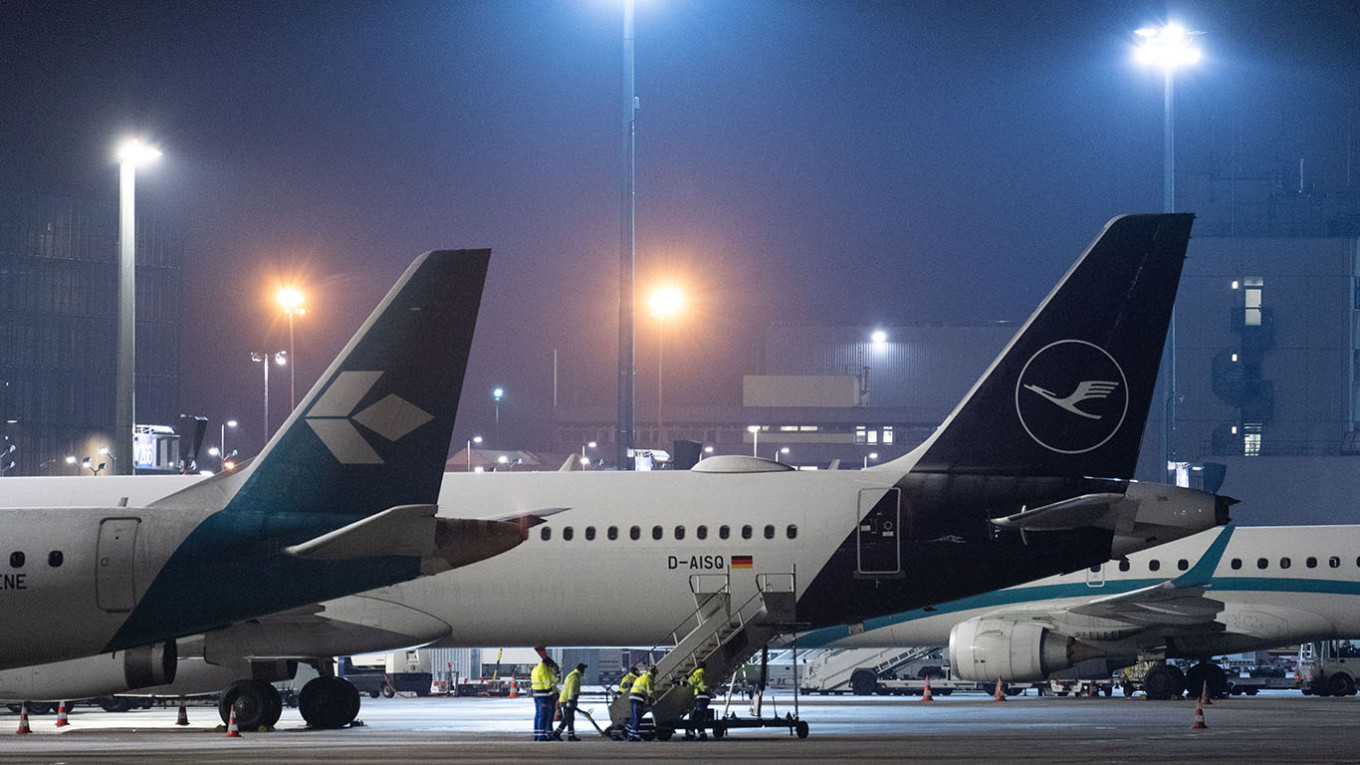
 Germany on Friday, December 12, formally accused Russia of orchestrating cyber operations against its aviation infrastructure and attempting to interfere in the countrys February general election, prompting Berlin to summon the Russian ambassador in protest. A spokesperson for Germanys foreign ministry said investigations by national security agencies uncovered clear evidence linking the activities to hacker groups controlled by Russias military intelligence service, the GRU. Based on comprehensive analysis by the German intelligence services, we have been able to clearly identify the handwriting behind it and prove Moscows responsibility, the spokesperson said. He explained that German authorities had traced a cyberattack on the countrys air traffic safety systems in August 2024 to a well known hacking group. We can now clearly attribute the cyberattack against German Air Safety in August 2024 to the hacker collective APT28, also known as Fancy Bear, he said during a routine press briefing. Our intelligence findings prove that the Russian military intelligence service GRU bears responsibility for this attack, the spokesperson added. German officials also accused Moscow of attempting to manipulate the outcome of Februarys parliamentary election, which resulted in a victory for the conservative bloc led by Chancellor Friedrich Merz, while the far right Alternative for Germany AfD recorded its strongest showing to date by finishing second. Second, we can now state definitively that Russia, through the Storm 1516 campaign, sought to influence and destabilise the most recent federal election, the spokesperson said. According to the ministry, the operation involved a Moscow based think tank with ties to the GRU, alongside affiliated groups that circulated fabricated material online. These included artificially generated images and deepfake content designed to inflame tensions within German society and weaken confidence in democratic institutions. The spokesperson said Germany possesses absolutely solid proof of Russias involvement but declined to provide further technical details, citing the sensitive nature of intelligence work. When contacted, the Russian embassy in Berlin declined to offer an immediate response to the allegations. Berlin warned that the accusations would be followed by concrete action, saying the government was preparing retaliatory steps in coordination with European allies. The spokesperson said Germany would pursue a series of countermeasures to make Russia pay a price for its hybrid actions, in close coordination with our European partners. He added that Berlin would back new individual sanctions against hybrid actors on a European level, though he did not specify which individuals or entities would be targeted. In addition, he said European Union states would begin tracking the movement of Russian diplomats across the Schengen Area starting in January, explaining that the aim is to facilitate better information exchange and minimise intelligence risks. The allegations come amid heightened concern across Europe over suspected Russian espionage, sabotage operations, drone surveillance, cyberattacks and coordinated disinformation campaigns. Germany, which has become Ukraines second largest provider of military and financial assistance since Russia launched its full scale invasion in 2022, has also accused Moscow of responsibility for recent drone flights near several European airports. Chancellor Merz previously described those incidents as part of a broader effort by Russian President Vladimir Putin to intimidate Europe through non conventional means. It is Russia that is trying to destabilise us in Germany and in Europe ever more ruthlessly with hybrid methods of war, Merz said in October. We will defend ourselves against them now and in the future.The post Germany blames Russia for cyberattack on air safety and election interference appeared first on Linda Ikeji Blog.

0 Comments