
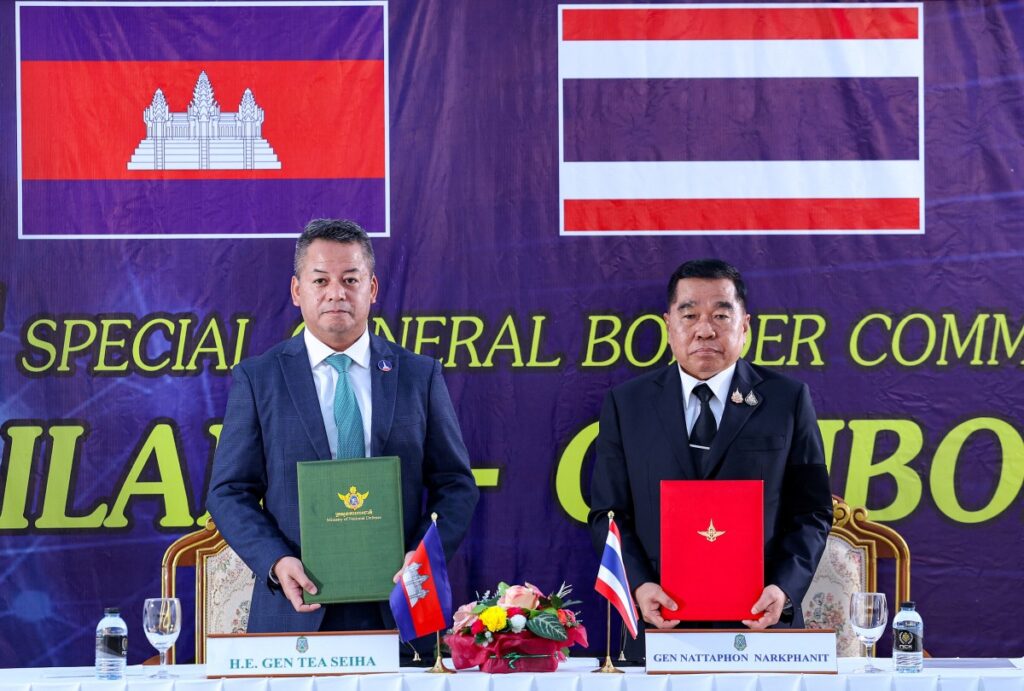
 Thailands army has accused Cambodia of breaching a newly signed ceasefire agreement by flying more than 250 drones into Thai territory, raising fresh doubts over the durability of the truce reached after weeks of deadly border clashes. Thailand and Cambodia agreed to an immediate ceasefire on Saturday, December 27, committing to halt renewed fighting that had killed dozens of people and displaced more than one million residents along their shared border this month. However, the Thai military said on Monday, December 29, that the agreement had already been violated. In a statement, the Thai army said more than 250 unmanned aerial vehicles (UAVs) were detected flying from the Cambodian side, intruding into Thailands sovereign territory on Sunday night. Such actions constitute provocation and a violation of measures aimed at reducing tensions, which are inconsistent with the Joint Statement agreed during a bilateral border committee meeting on Saturday, it added. The allegation came as the foreign ministers of both countries concluded two days of talks hosted by China, aimed at rebuilding trust and improving relations. The Thai army warned that the reported drone activity could affect the security of both military personnel and civilians in border areas. Thai army spokesman Winthai Suvaree said the drone flights reflected Cambodias continued provocative actions and hostile stance toward Thailand, adding that Thailand may need to reconsider its decision regarding the release of 18 Cambodian soldiers, depending on the situation and the behaviour observed. Under the ceasefire pact signed on Saturday, the two Southeast Asian neighbours agreed to halt hostilities, freeze troop movements, cooperate on demining and cybercrime, and allow displaced civilians to return home. Thailand also pledged to release 18 Cambodian soldiers captured in July within 72 hours, provided the ceasefire held. Cambodias Foreign Minister Prak Sokhonn downplayed the incident, describing it as a small issue related to flying drones seen by both sides along the border line. In remarks broadcast on Cambodian state television, he said the matter had been discussed and that both sides agreed to investigate and resolve it immediately. The latest tensions follow renewed fighting this month that spread to nearly every border province on both sides, collapsing an earlier truce for which former U.S. president Donald Trump had previously taken credit. Five days of clashes in July left dozens dead before a ceasefire was brokered with the involvement of the United States, China and Association of Southeast Asian Nations chair Malaysia. The long-running dispute centres on the colonial-era demarcation of the 800-kilometre Thai-Cambodian border, where both sides claim ownership of centuries-old temple ruins. While both governments have again agreed to stop fighting, officials acknowledge that resolving the boundary demarcation remains a critical and unresolved issue. At the close of talks in Chinas Yunnan province on Monday, Cambodia, Thailand and China issued a joint statement saying they had discussed working step by step through mutual efforts to resume normal exchanges, rebuild political mutual trust, improve Cambodia-Thailand bilateral relations, and safeguard regional stability. Cambodia also announced that it had invited Thailand to another bilateral meeting in early January to continue discussions on border survey and demarcation work..

0 Comments