
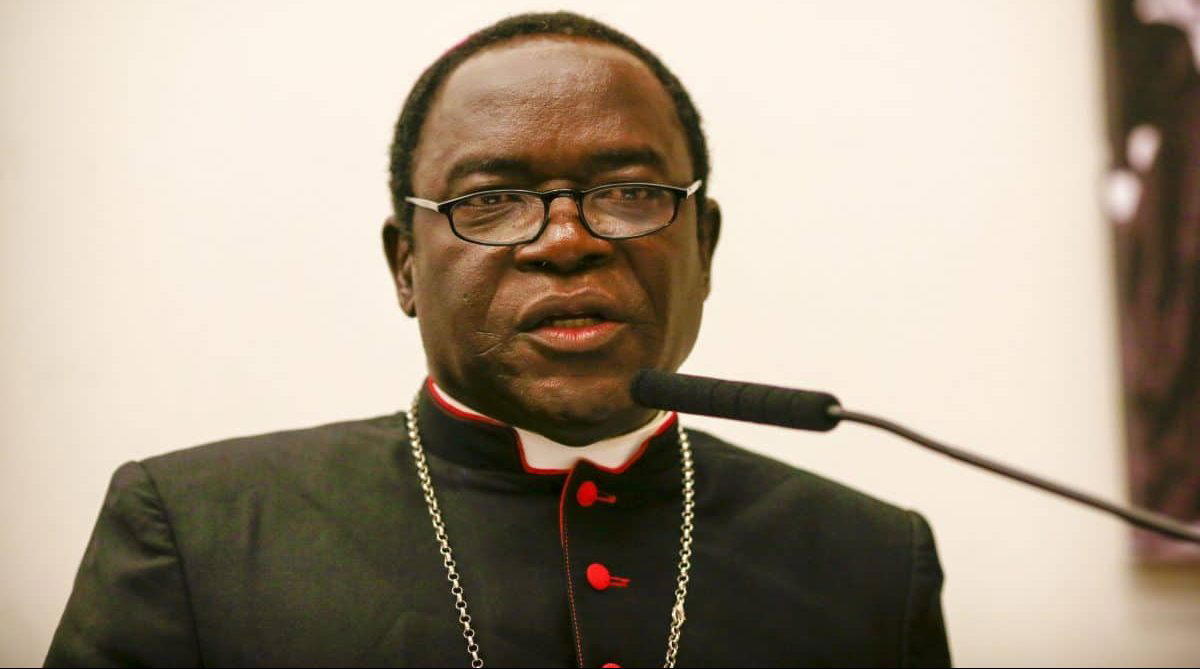
 The Bishop of the Sokoto Diocese, Matthew Hassan Kukah, warned in Abuja that the growing belief in arming communities to confront terrorists and bandits is giving citizens nothing more than what he described as a false sense of security. He delivered the message on Thursday at a national dialogue on a whole of society approach to preventing violence and conflict in Northern Nigeria, hosted by the National Peace Committee, the Kukah Centre and the Office of the National Security Adviser. Kukah questioned the long term implications of distributing weapons to civilians, asking what would happen to those arms if peace were eventually restored. He argued that Nigerias instability is rooted in deeper social fractures, including broken homes, fragmented communities and weakened moral foundations, and said these vulnerabilities have created fertile ground for bandits and criminals. He called for unity across faith, ethnic and cultural lines, insisting that the countrys security crisis can only be resolved when citizens commit collectively to confronting their shared challenges. The scale and depth of the insecurity problem in the country show that we have hit rock bottom, and the only direction left is upwards, he said. He added, There is a growing belief that communities can defend themselves by arming up. But arms will not solve our problems. They offer a false sense of security. And when peace returns, where will those weapons go? As a Christian, it is not accidental that Jesus asked Peter to put back his sword. Gods teachings do not change; circumstances may change, but the truth does not. Kukah described the Abuja dialogue as part of a long journey and urged participants to approach nation building as custodians of conscience and hope. We meet because we believe Nigeria is worth fighting for, not with weapons, but with truth, courage, justice, and compassion, he said. Our gathering is meant to respond to the cries in our land, not to look for scapegoats or excuses. Nigeria remains a country searching for itself, blessed with extraordinary diversity. He warned that the country has yet to fully turn its diversity into an advantage. Our challenge is to turn that diversity into an asset, not a liability. Nation building is about gathering and harmonising possibilities and skills from across the board. Drawing a comparison with the United States, he said Nigeria should learn from a nation that thrives on diversity. If diversity were a liability, America would not be what it is, he said. Kukah also stressed that peace cannot be delegated. Let us also acknowledge that peace cannot be outsourced. Peace is the collective work of all of us, he said, arguing that a whole of society model requires every segment of the population to take part in addressing insecurity. He said government must lead with humility, transparency and justice, while religious and traditional leaders must show courage in confronting extremism within their communities. Peace begins with individuals, families, communities, and societies. If each of us seeks peace where we are, the nation will benefit, he said. He called for efforts to build trust and ensure more inclusive representation. We must build trust. We must speak for the voiceless. We must feel free to raise our voices. Women make up the majority of our population, yet many lack a voice, not because of numbers, but because voice means participation and representation.

0 Comments