
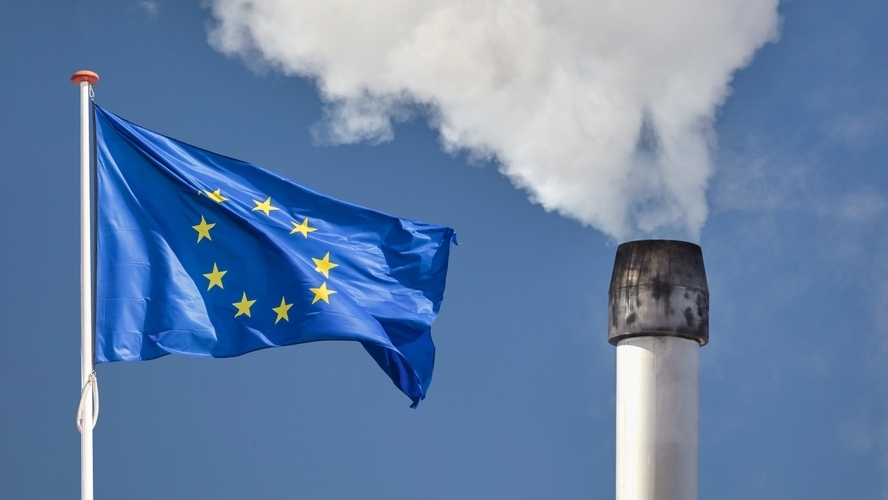
The European Union is revamping its carbon market in response to rising energy costs and pressure from member states and industry. As the conflict in Iran escalates, the European Commission has proposed changes to the Emissions Trading System (ETS), the EU's primary tool for reducing greenhouse gas emissions. Effective April 1, the Commission outlined key adjustments to the ETS, a system that's been in place since 2005 and requires major polluters to purchase emissions allowances, which are then auctioned and traded.
The EU's proposed changes aim to stabilize the market by making more allowances available when demand surges and prices skyrocket. This move is a direct response to the current situation, where supply has consistently exceeded demand, resulting in a surplus of permits. To mitigate this issue, some allowances have been placed in reserve, while others have been permanently removed from circulation.
The Commission's proposal suggests retaining unsold allowances as a buffer, rather than invalidating them. This would enable the EU to better respond to future market developments, including potential supply tightness in the coming decades. The move is in line with comments made by European Commission President Ursula von der Leyen, who pledged to update the ETS earlier this month. Von der Leyen mentioned the need for a more realistic emissions reduction trajectory and the possible extension of free emission allowances beyond 2035.
The ETS has faced criticism from European industry, which claims that the system contributes to high energy costs, particularly for gas-fired power plants. The Commission

0 Comments